Low-Impact Wetland Rewilding in Congresbury
Restoring biodiversity through ephemeral habitats & natural processes
Location: Congresbury, North Somerset
Project Scale: 4.5-Acre Private Site
Core Expertise: Rewilding, Hydraulic Habitat Creation, Native Seed Bank Management
Our Approach: Minimal Intervention
At The Nature Gardener, we believe the most resilient habitats are those created by nature itself. Our strategy focused on two key ecological principles:
1. The 25m Ephemeral Scrape
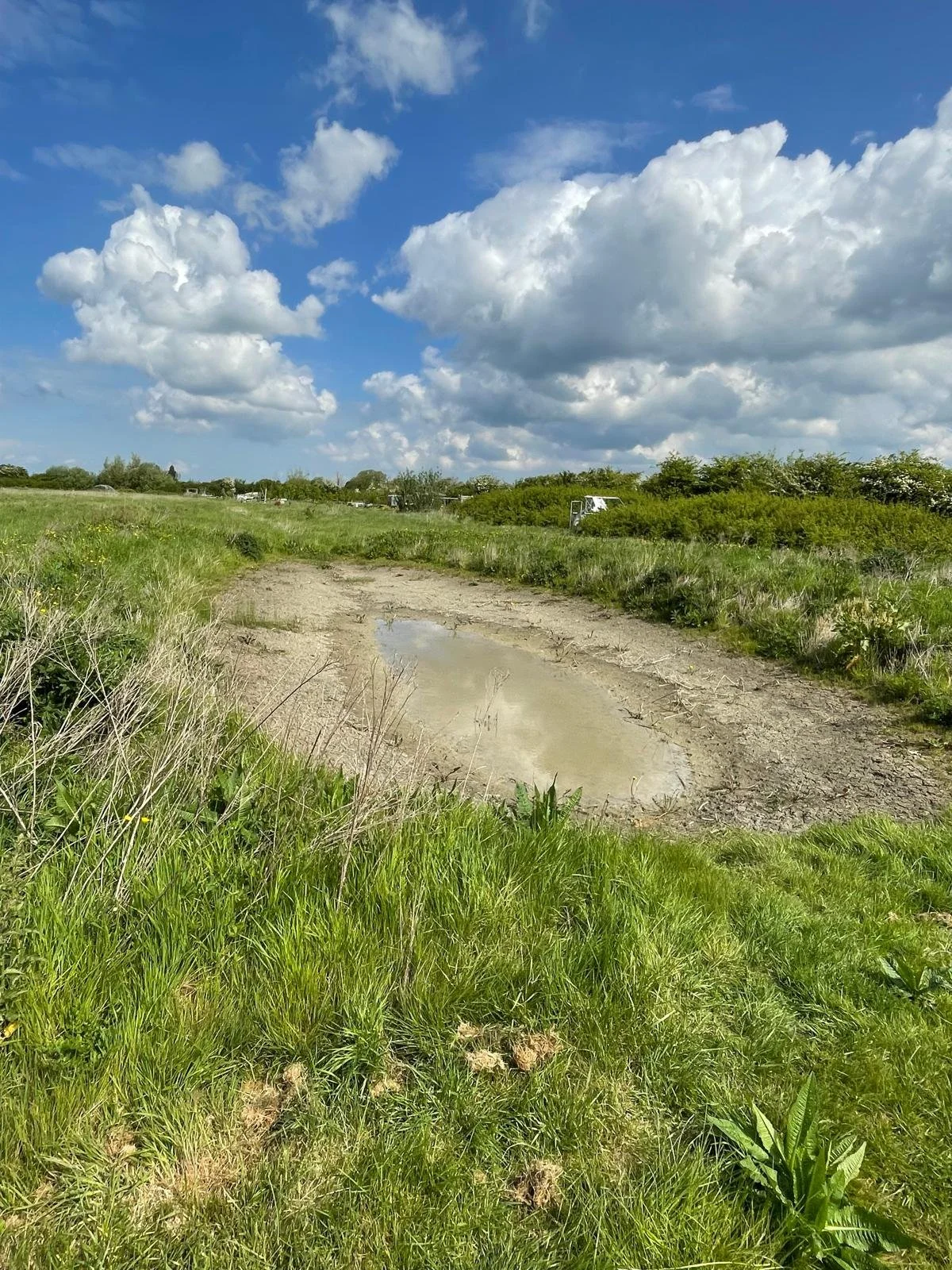
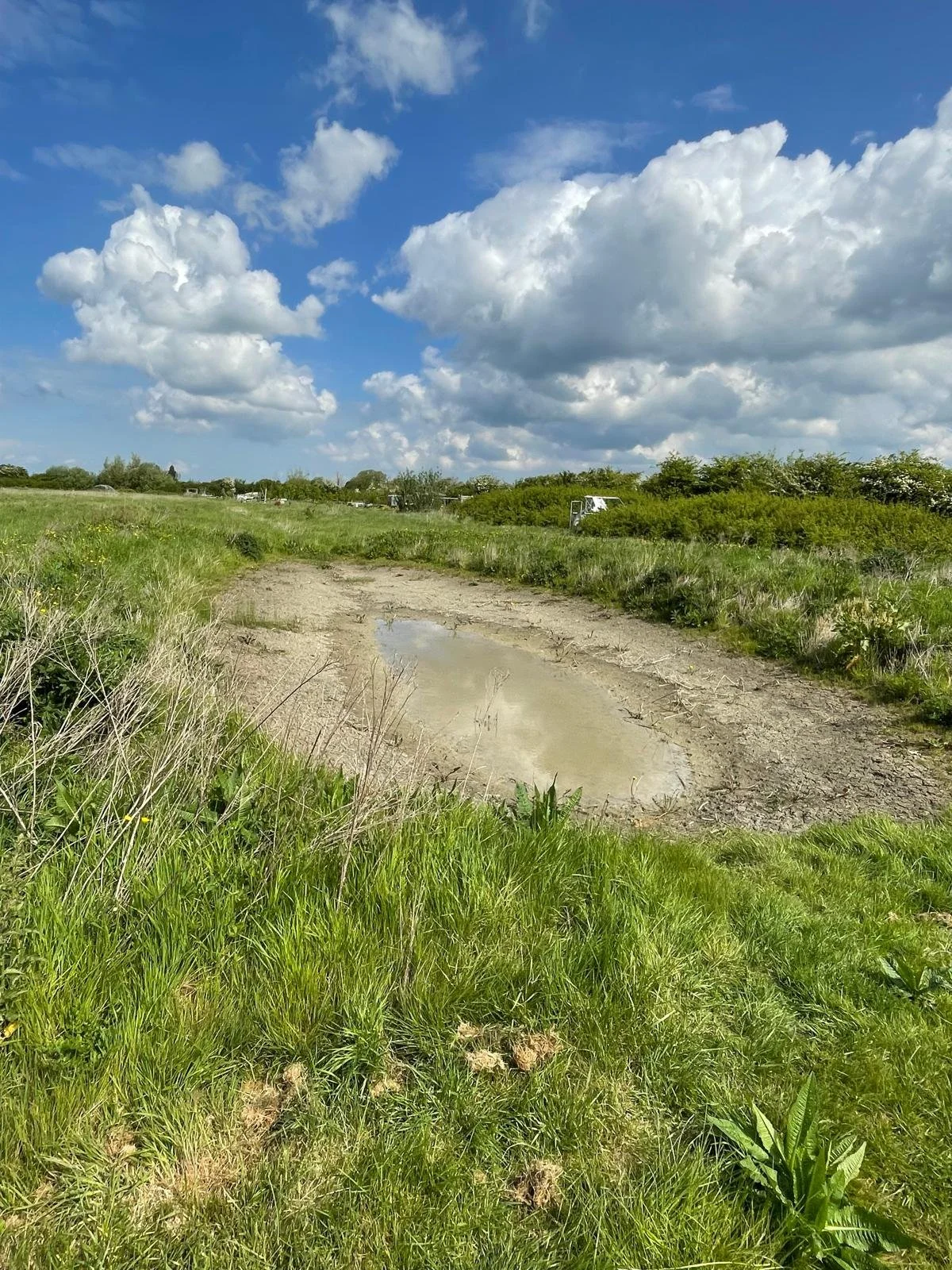
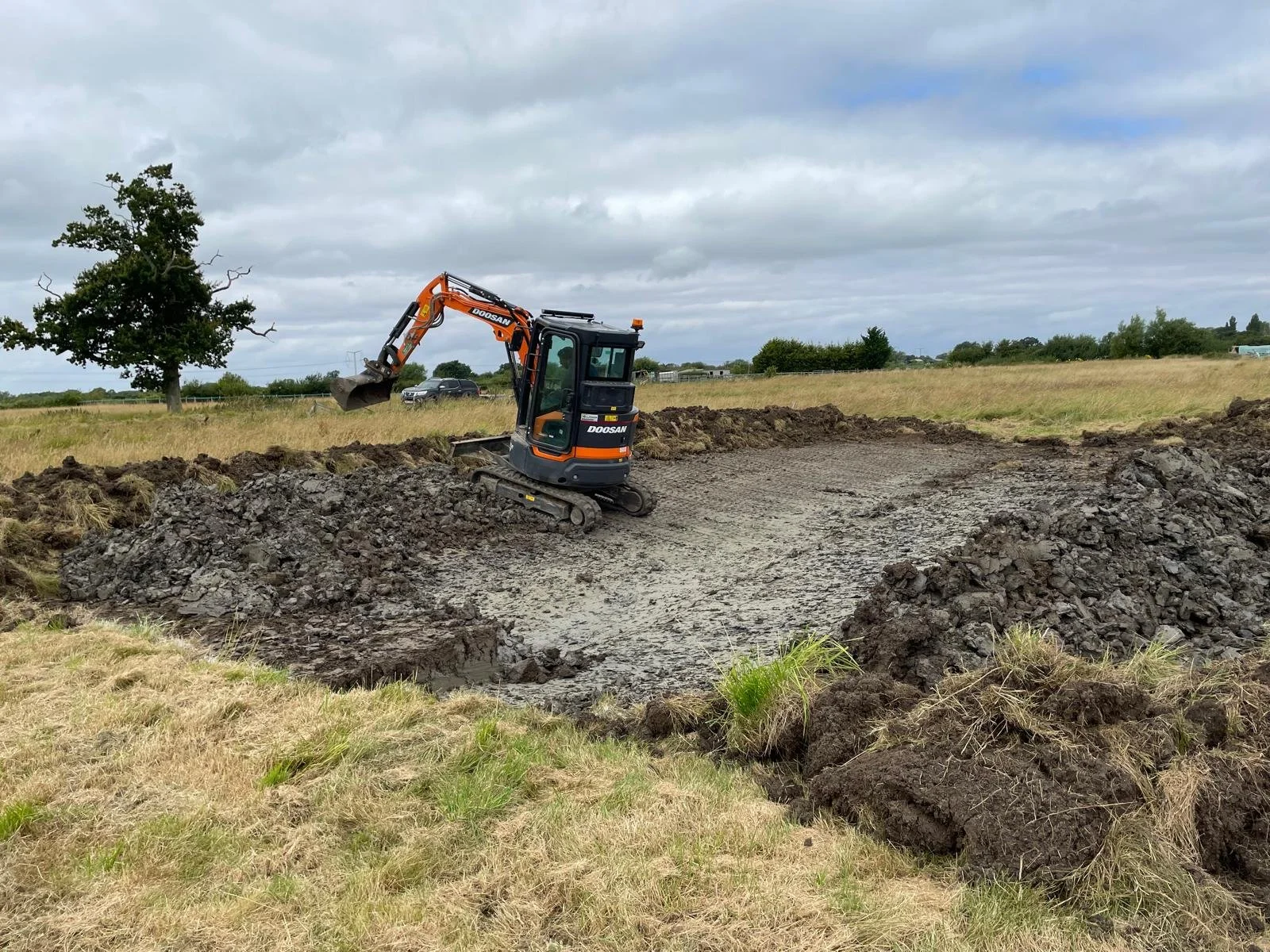
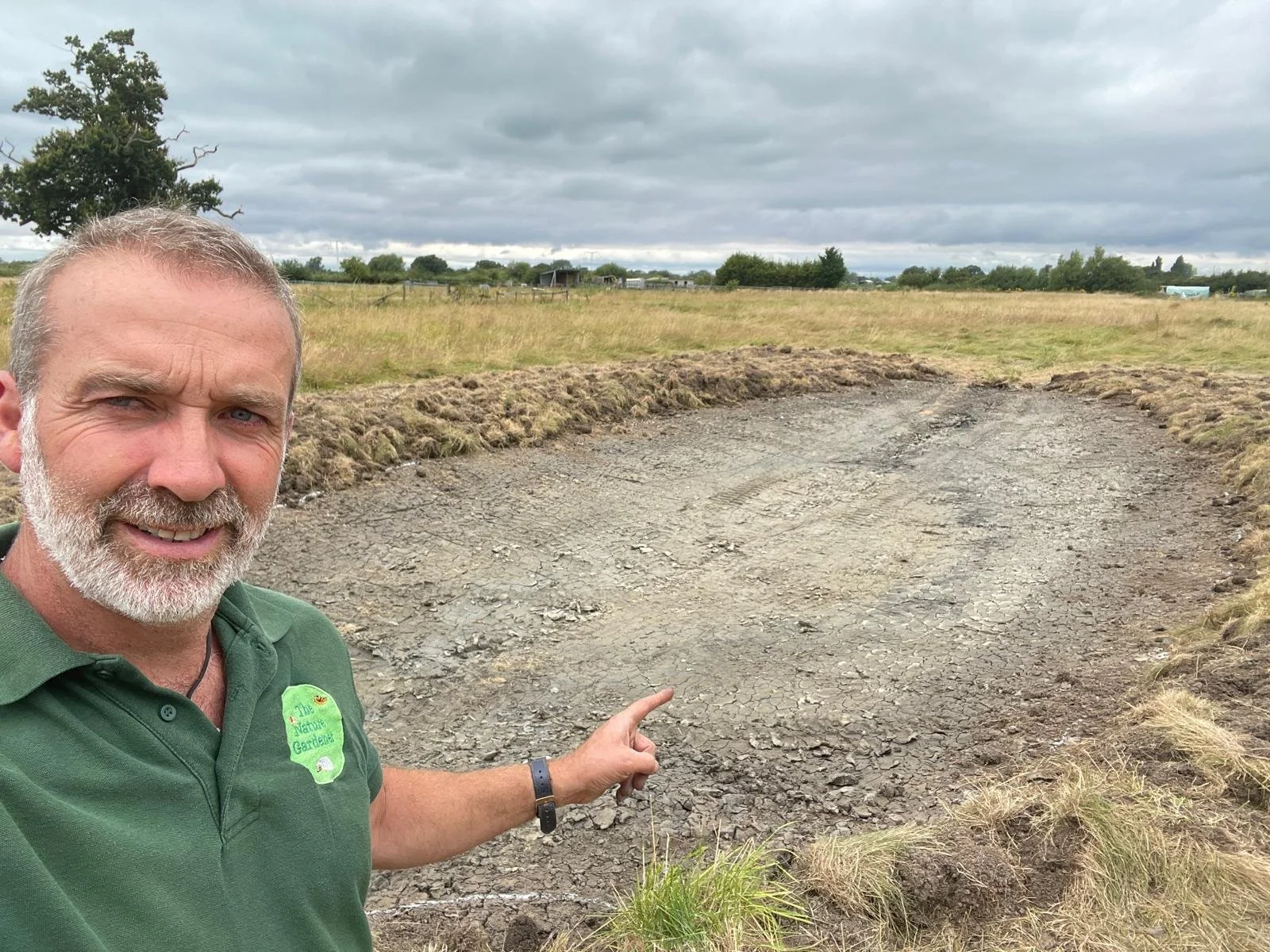
We designed and excavated a 25-metre scrape (a shallow, unlined wetland feature). Unlike a traditional garden pond, this was engineered to fill naturally via rainfall, allowing water levels to fluctuate with the seasons.
Why Ephemeral? Temporary or seasonal ponds are among the UK’s rarest aquatic habitats. By avoiding permanent deep water, we eliminated the threat of predatory fish, creating a safe haven for specialist species like the Fairy Shrimp and rare native flora that require wet-dry cycles to germinate.
2. Naturalised Seed Bank Regeneration
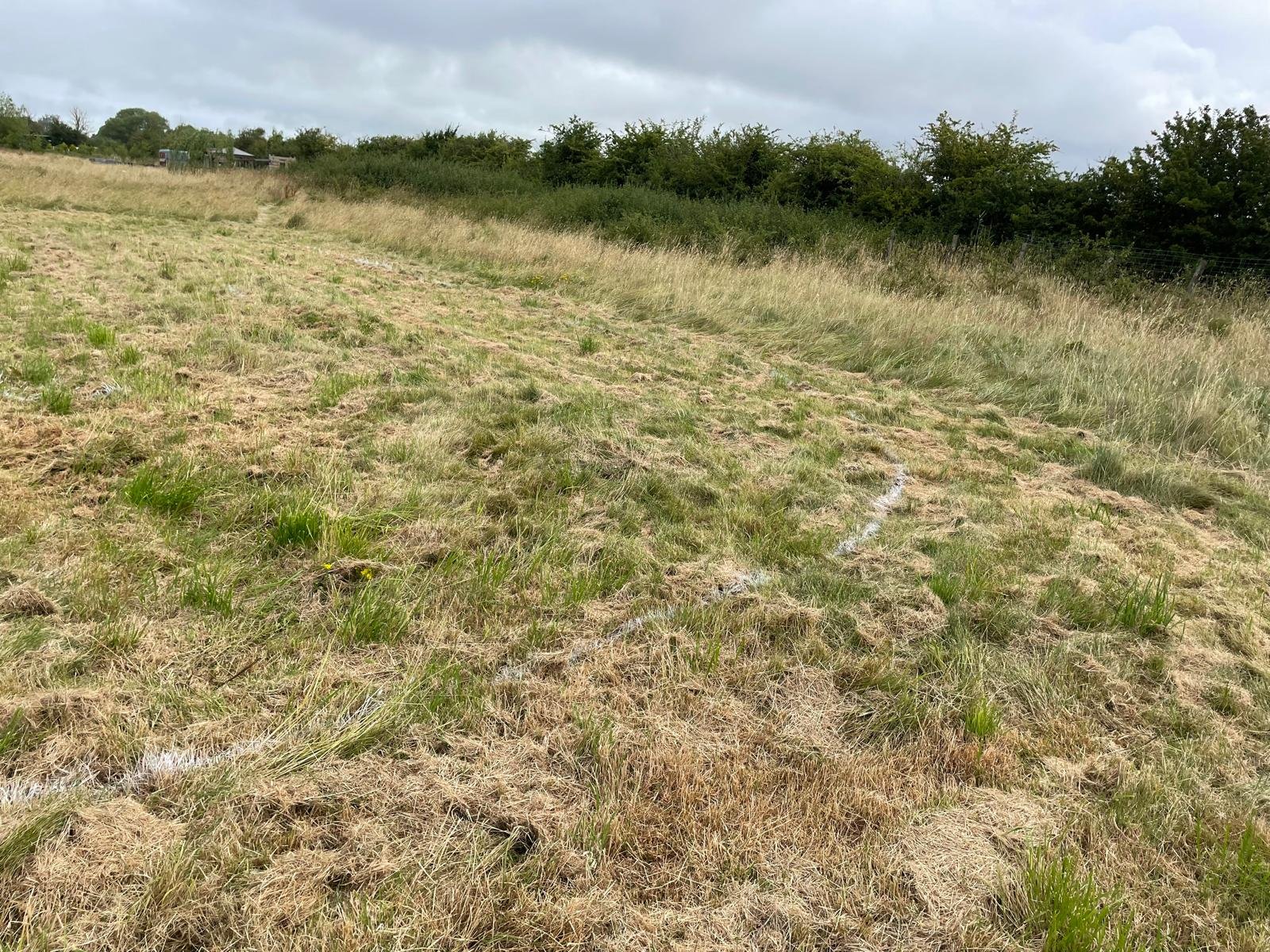
Rather than importing commercial wildflower mixes (which can often lack local genetic provenance), we utilised the site’s own natural seed bank.
Spoil from the excavation was used to create varied banked topography.
This fresh earth provided the perfect niche for dormant seeds and surrounding local species to colonise naturally.
The Challenge: Enhancing a Farm-Bordered Landscape
The client owned a substantial 2-acre plot in the heart of Congresbury, bordered by traditional livestock farms and historic Somerset rhynes (drainage ditches). While the site already hosted flagship species like Barn Owls and Grass Snakes, the existing grassland lacked the structural diversity needed to truly support a thriving ecosystem.
The Goal: To increase wildlife density and variety without using artificial liners, plastics, or heavy construction footprints.
The Results: Two Years of Ecological Succession
By allowing nature to lead, the site has undergone a remarkable transformation into a high-functioning habitat.
Rewilding isn't just about letting it go wild; it’s about understanding the land’s hydrology and biology to kickstart natural processes. By removing artificial materials from the equation, we’ve created a habitat in Congresbury that is 100% sustainable and perfectly attuned to the local Somerset landscape.
| Feature | Observations & Species Recorded |
|---|---|
| Aquatic Life | Significant populations of Diving Beetles, Water Boatmen, and Pond Skaters. |
| Flora | The banks now host a rich tapestry of Ox-eye Daisy, Bird’s-foot Trefoil, Teasel, and Willowherb. |
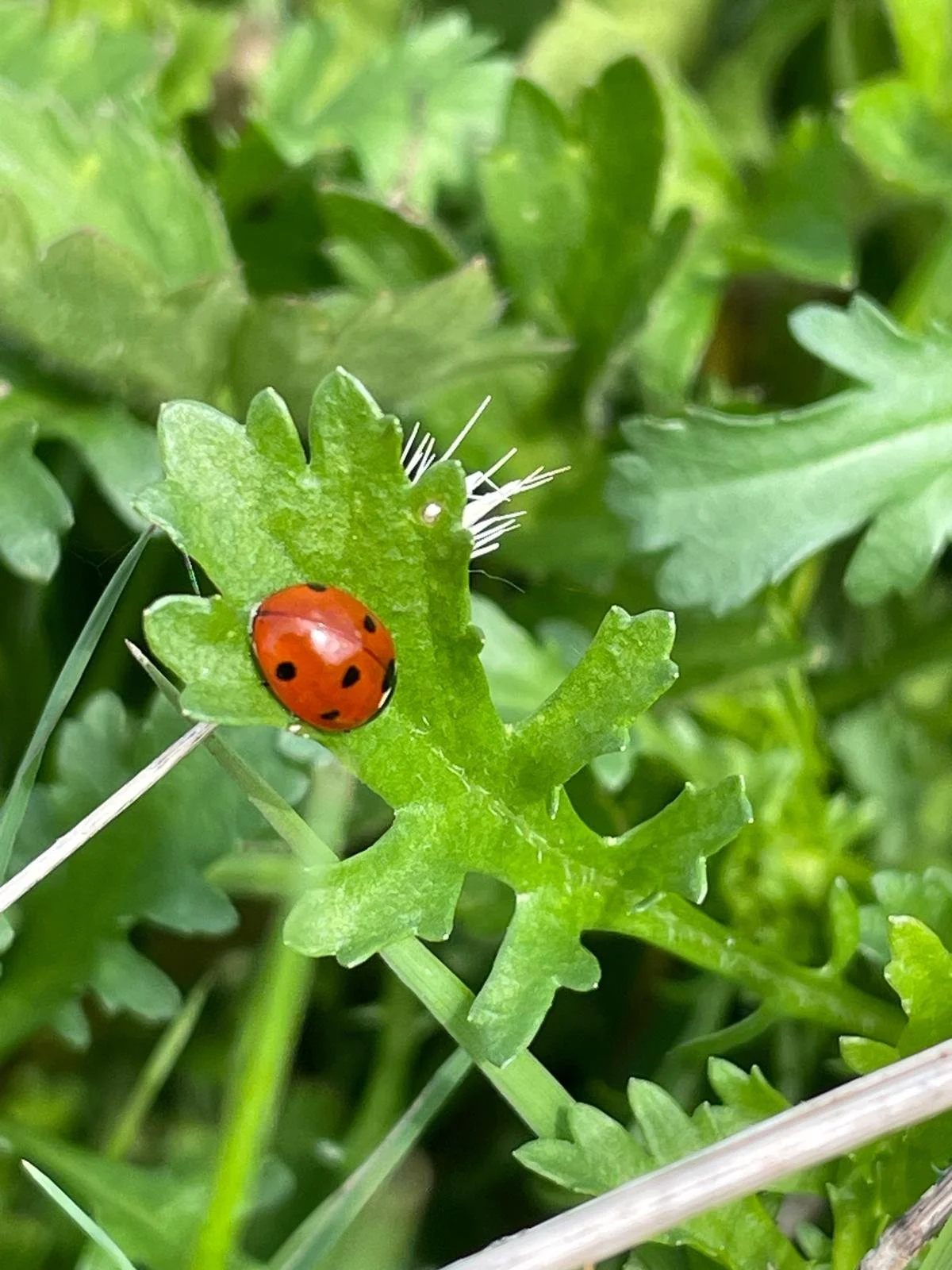
| Invertebrates | A thriving micro-wilderness of Grasshoppers, Ground Beetles, and Ladybirds. |
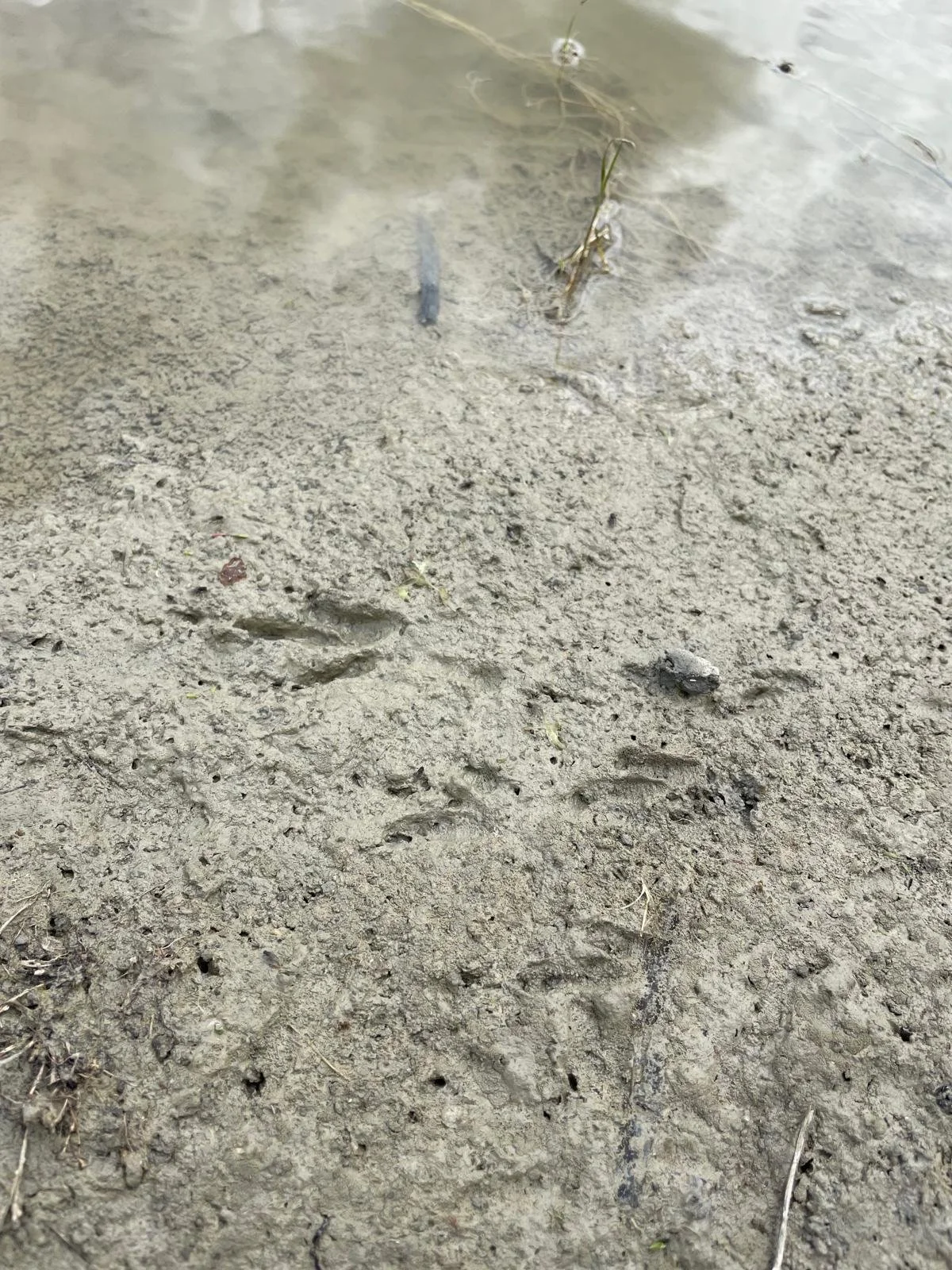
| Mammals & Birds | Regular tracks indicate the scrape is a vital watering hole for local mammals and farmland birds. |
“I would very much recommend Tony to anyone who wants someone with a passion for creating wildlife habitats no matter how big or small the space is that you look after. His knowledge, skills and expertise will help you achieve it.”
Robert Mclaughlin
Are you looking to restore the wild potential of your land?
From small-scale meadows to large-acreage rewilding projects, we provide the ecological expertise to help your landscape thrive.