Completing the Ecological Jigsaw in Panborough
Integrating a bespoke wildlife pond into an established Somerset orchard
Location: Panborough, North Somerset
Project Scale: Private Orchard & Traditional Garden
Core Expertise: Habitat Connectivity, Native Stone Construction, Aquatic Colonisation
Our Approach: Materiality and Biodiversity
A successful wildlife pond must do more than just hold water; it must provide safe entry and exit points for a variety of species.
1. Locally Sourced Artistry
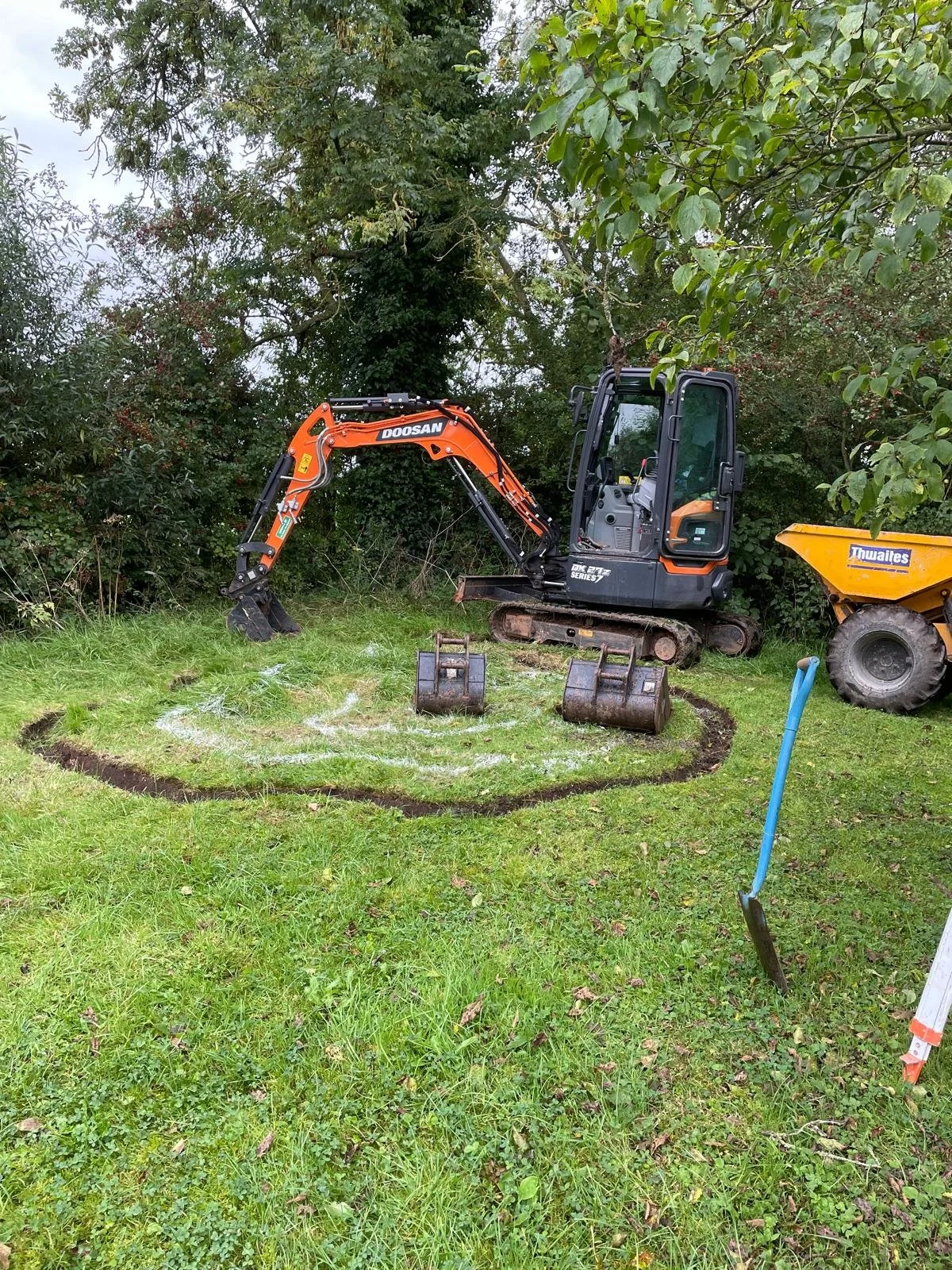
To ensure the pond felt like a natural extension of the Somerset landscape, we utilised locally sourced sandstone rocks. These were paired with sand and subsoil to create varying depths and beached entry points, allowing mammals and reptiles easy access to the water's edge.
2. Native Aquatic Planting
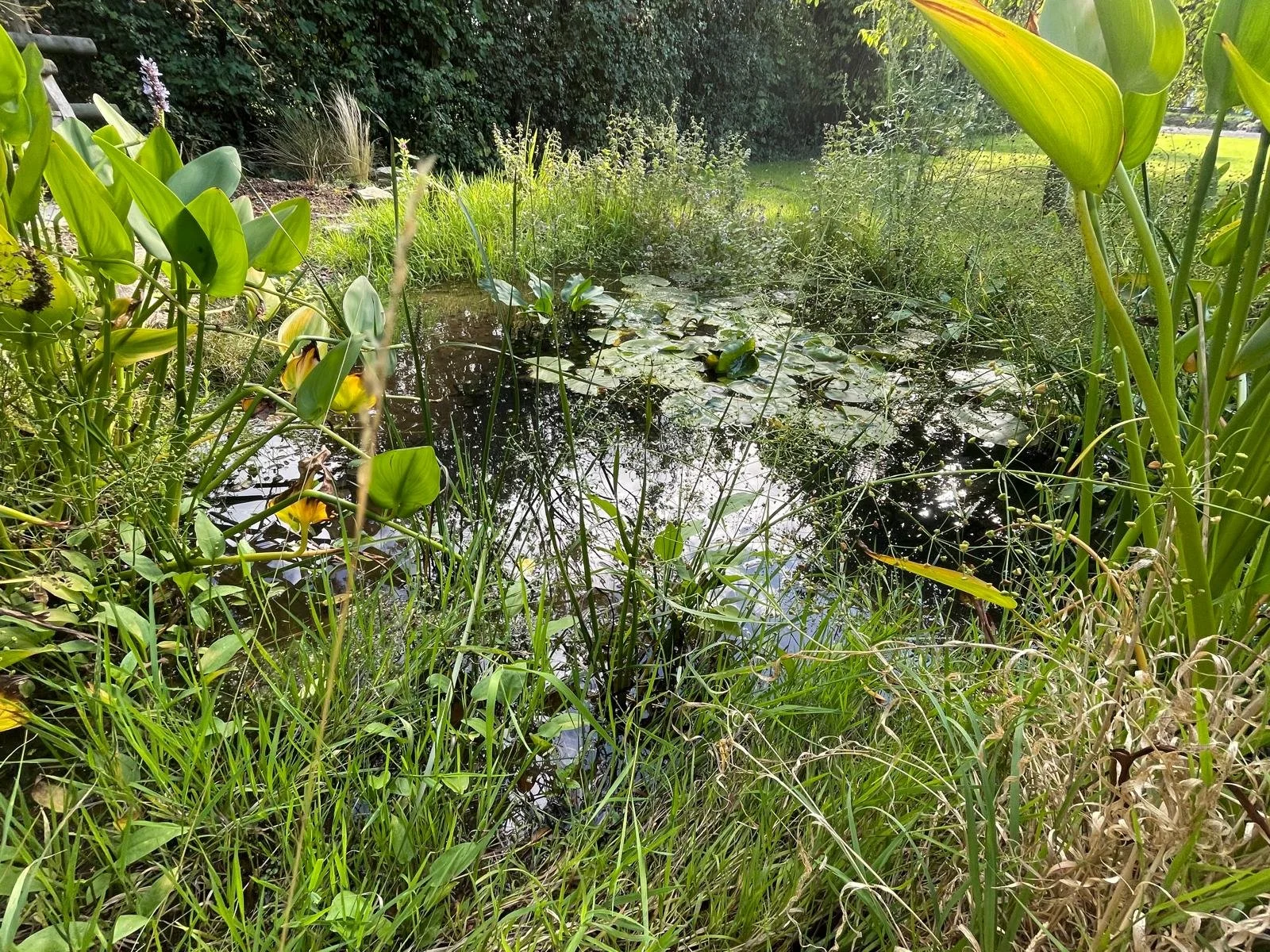
We curated a planting scheme consisting predominantly of native species. This was designed to provide:
Submerged Cover: For dragonfly larvae and newts.
Emergent Perches: For adult dragonflies and damselflies.
Oxygenation: Ensuring a healthy, self-sustaining system without the need for mechanical pumps or filters.
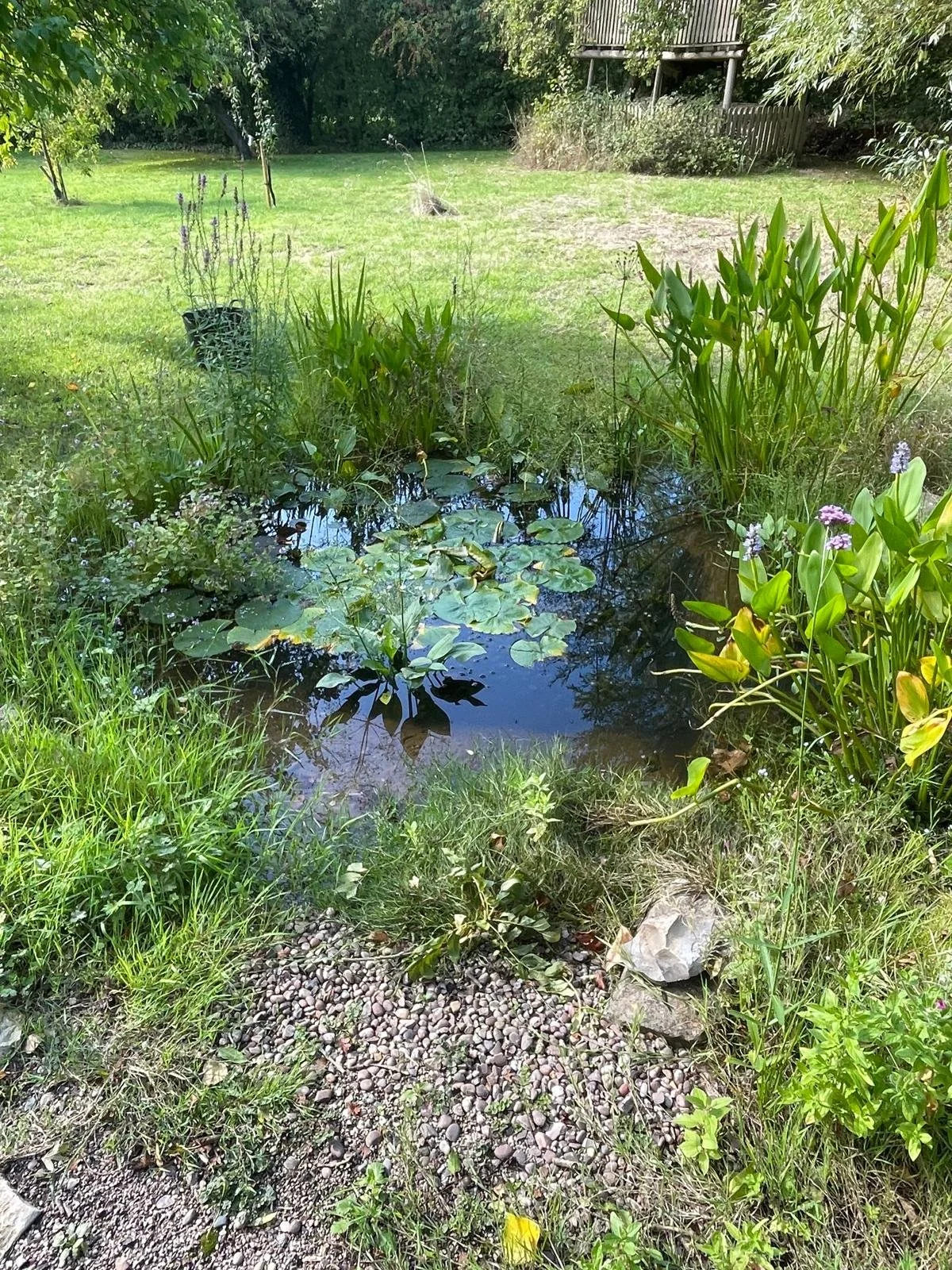
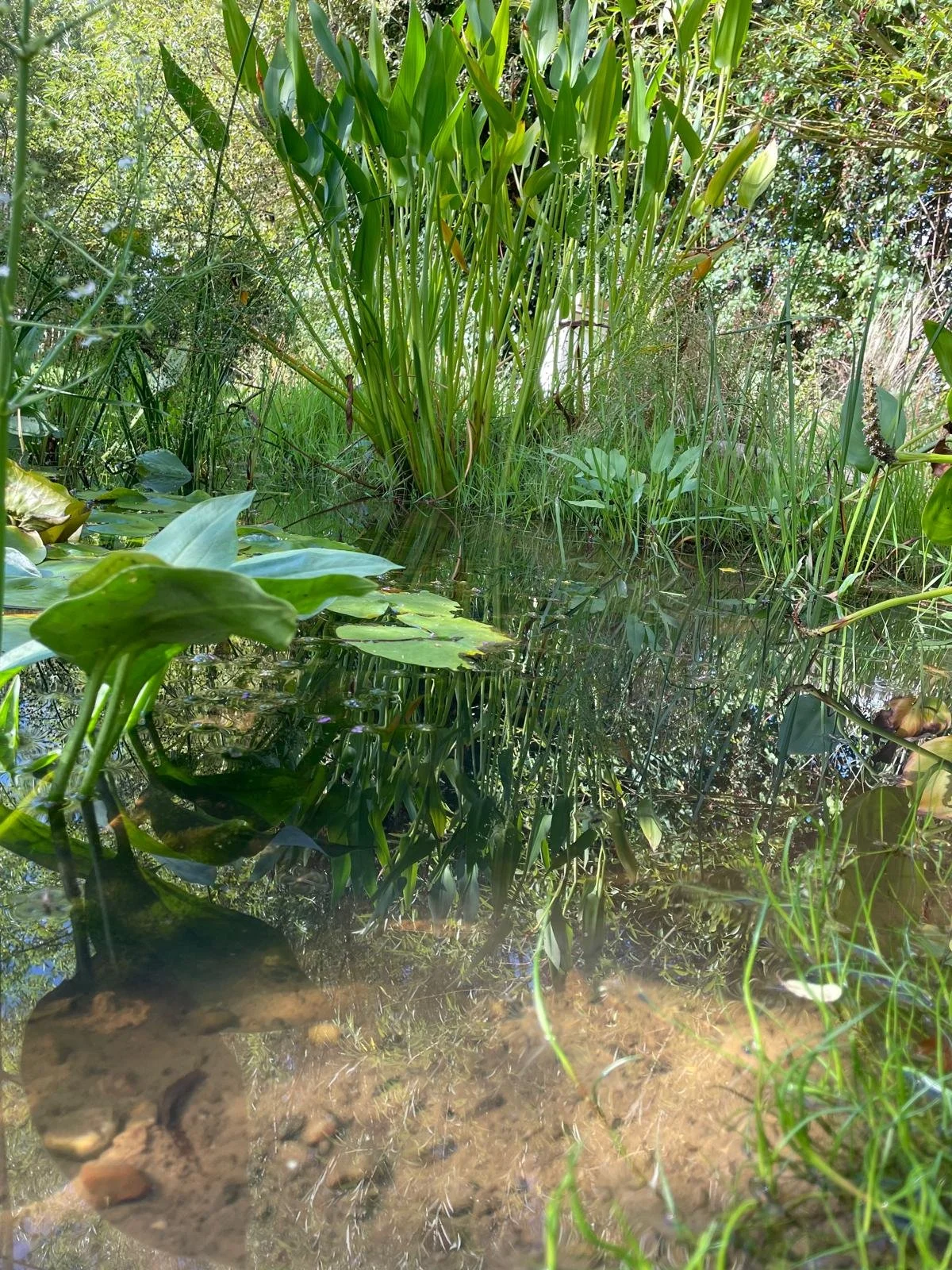
The Challenge: Connecting Existing Habitats
The clients possessed a beautifully managed garden, rich with mature Willow, Ash, and Hawthorn, alongside a traditional small orchard. While the grounds were already a haven for pollinators and birds, the landscape lacked a permanent water source, the vital missing piece required to support a full cycle of local biodiversity.
The Goal: To design and install a wildlife pond that felt integrated into the historic orchard setting while using sustainable, locally sourced materials.
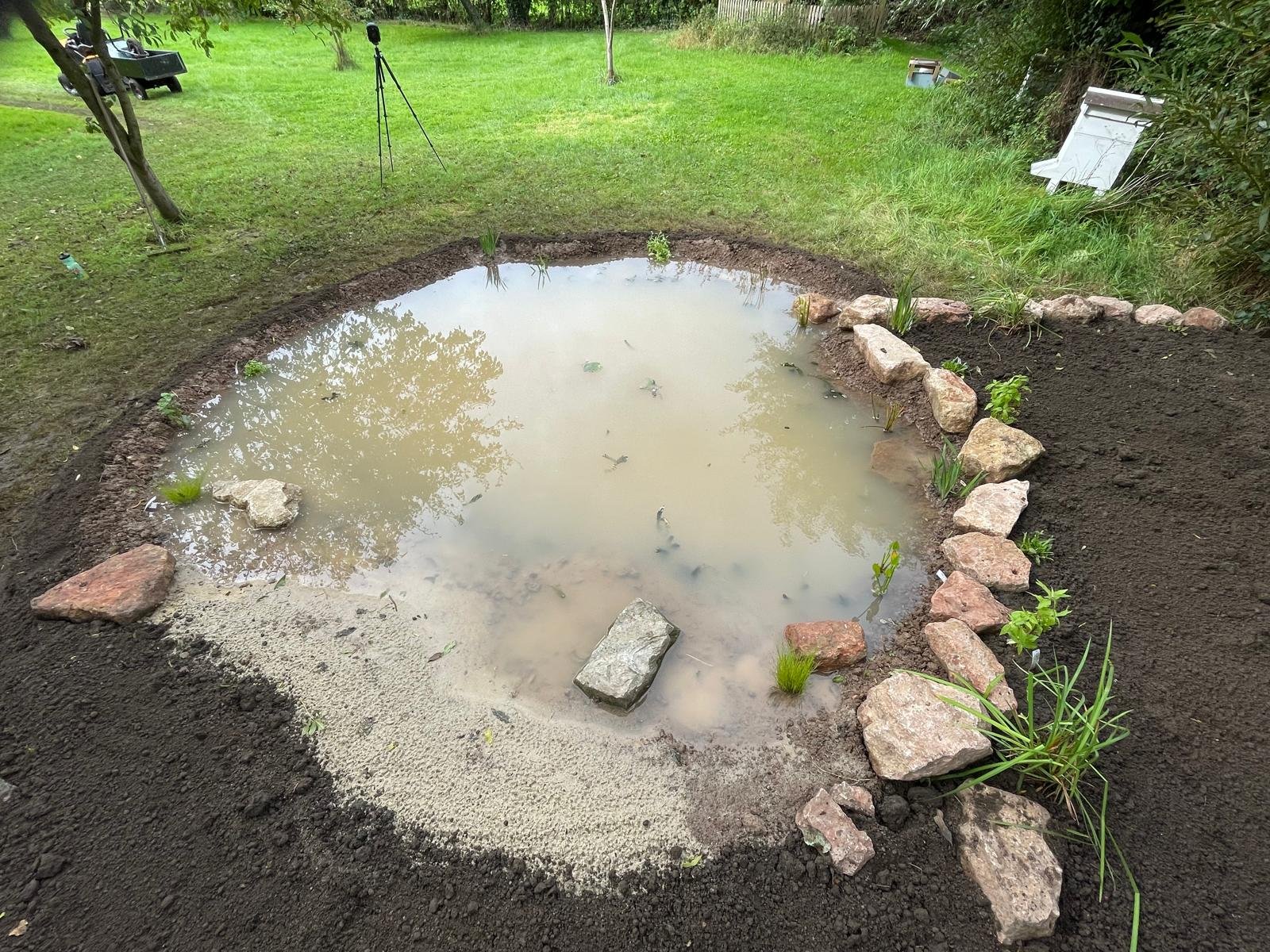
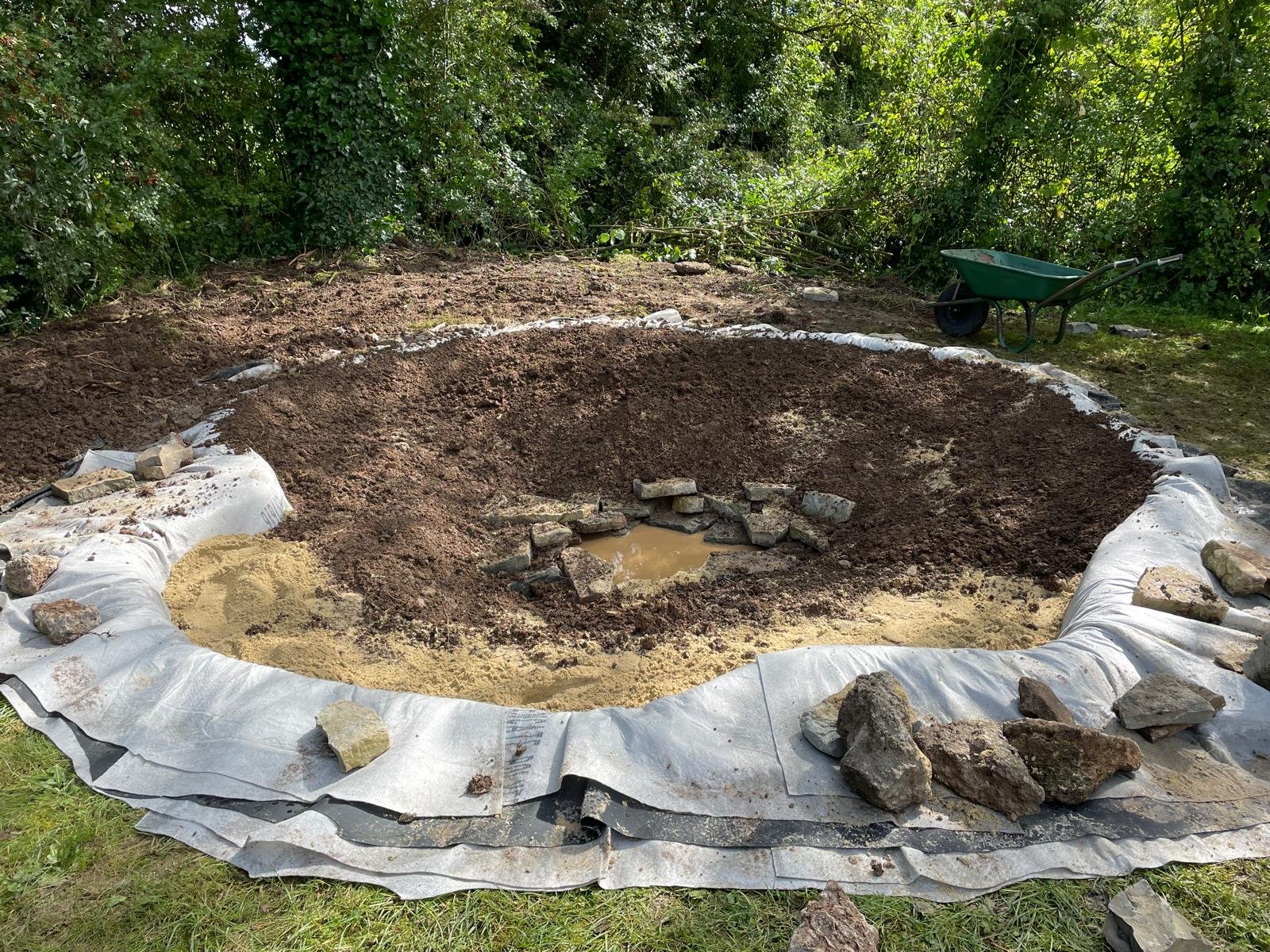
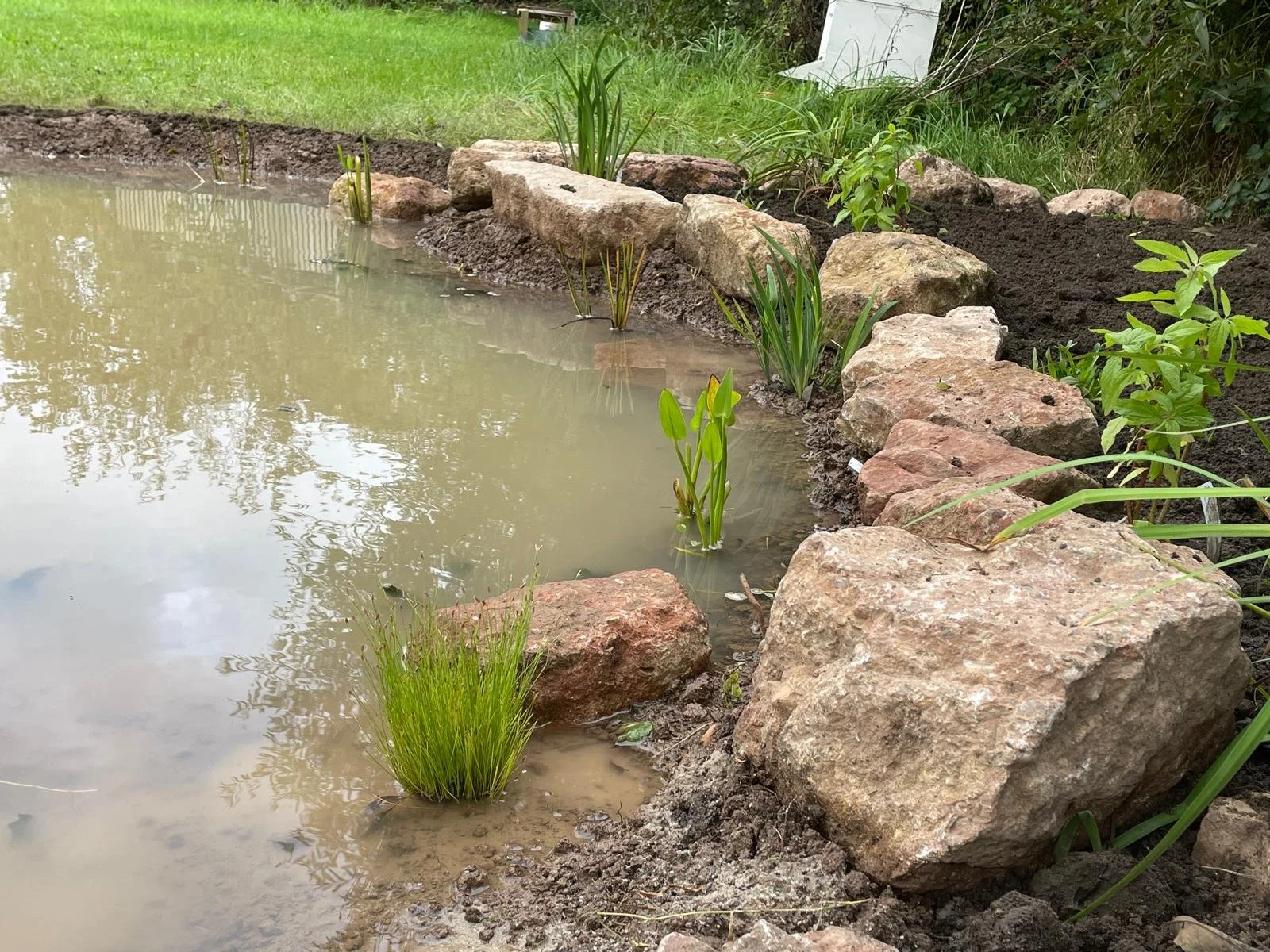
The Results: A Completed Ecosystem
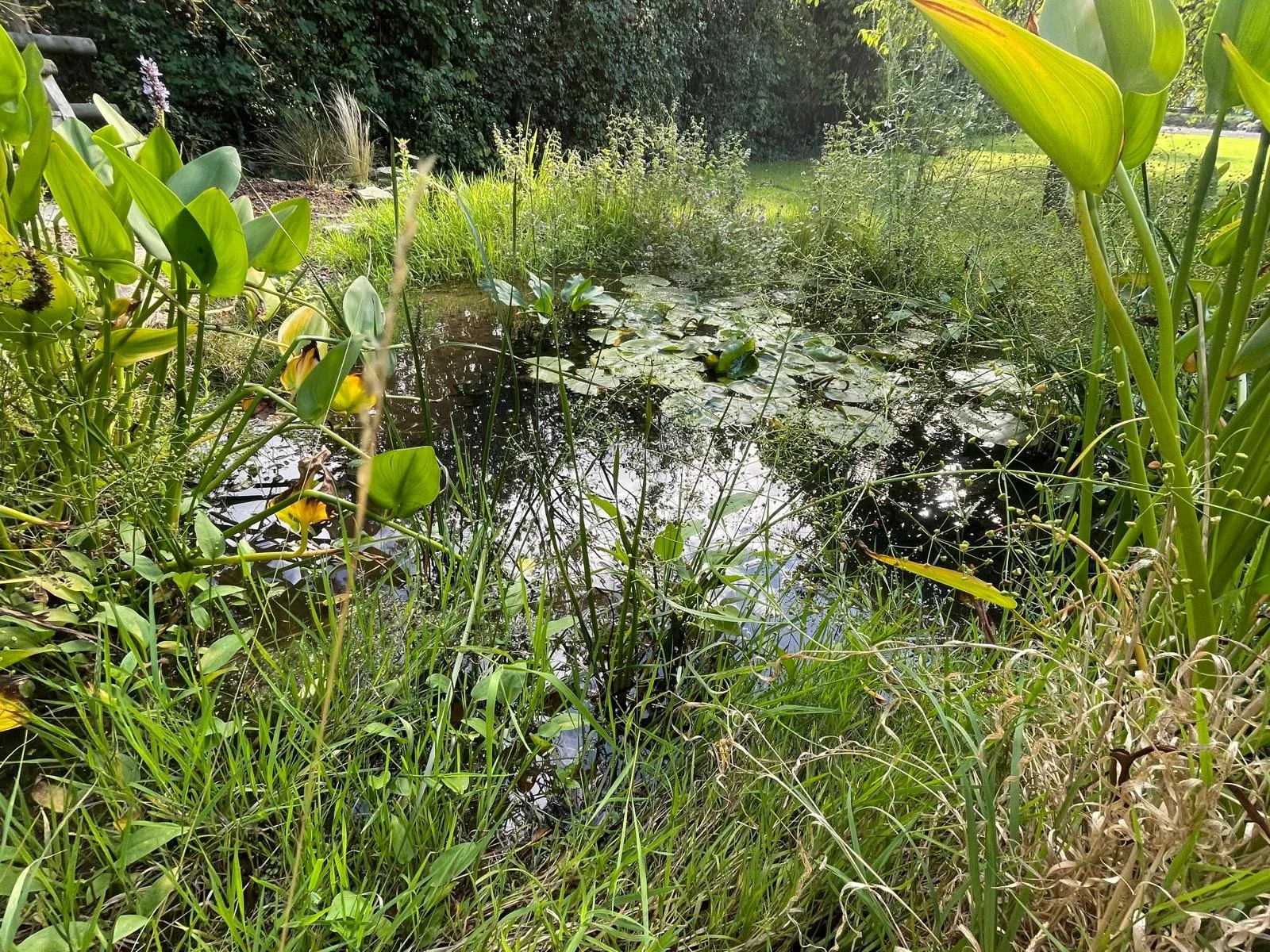
Two years post-completion, the pond has become the focal point of the garden’s wildlife activity. The transformation from a dry orchard floor to a thriving aquatic hub was rapid and profound.
A garden without water is a garden at half-capacity. By adding a pond to this Panborough site, we didn't just add a feature; we unlocked the potential of the surrounding orchard and hedging. It’s the single most effective way to invite the wild back into a managed space.
| Feature | Observations & Species Recorded |
|---|---|
| Amphibians | Established populations of Newts now use the pond for breeding. |
| Apex Invertebrates | Sightings of the impressive Great Diving Beetle and various Dragonfly larvae. |
| Habitat Mosaic | The pond has bridged the gap between the orchard and the mature hedging, creating a seamless wildlife corridor. |
| Pollinators | Increased activity from bees and hoverflies attracted to native aquatic marginals. |
Are you looking to restore the wild potential of your land?
From small-scale meadows to large-acreage rewilding projects, we provide the ecological expertise to help your landscape thrive.